
Parasite Profile
Larval Nematode
Nematode (roundworm)Intestinal mucosa, Large intestine, Perianal skinTropical / subtropical
Quick Facts
Scientific Name
Larval Nematode
Common Name
Immature roundworm
Parasite Type
Nematode (roundworm)
Where It Lives
Intestinal mucosa, Large intestine, Perianal skin
How It Spreads
Contaminated food, Contaminated water, Soil contact / skin penetration
Prevalence
Tropical / subtropical
Gold Standard
Stool microscopy (O&P)
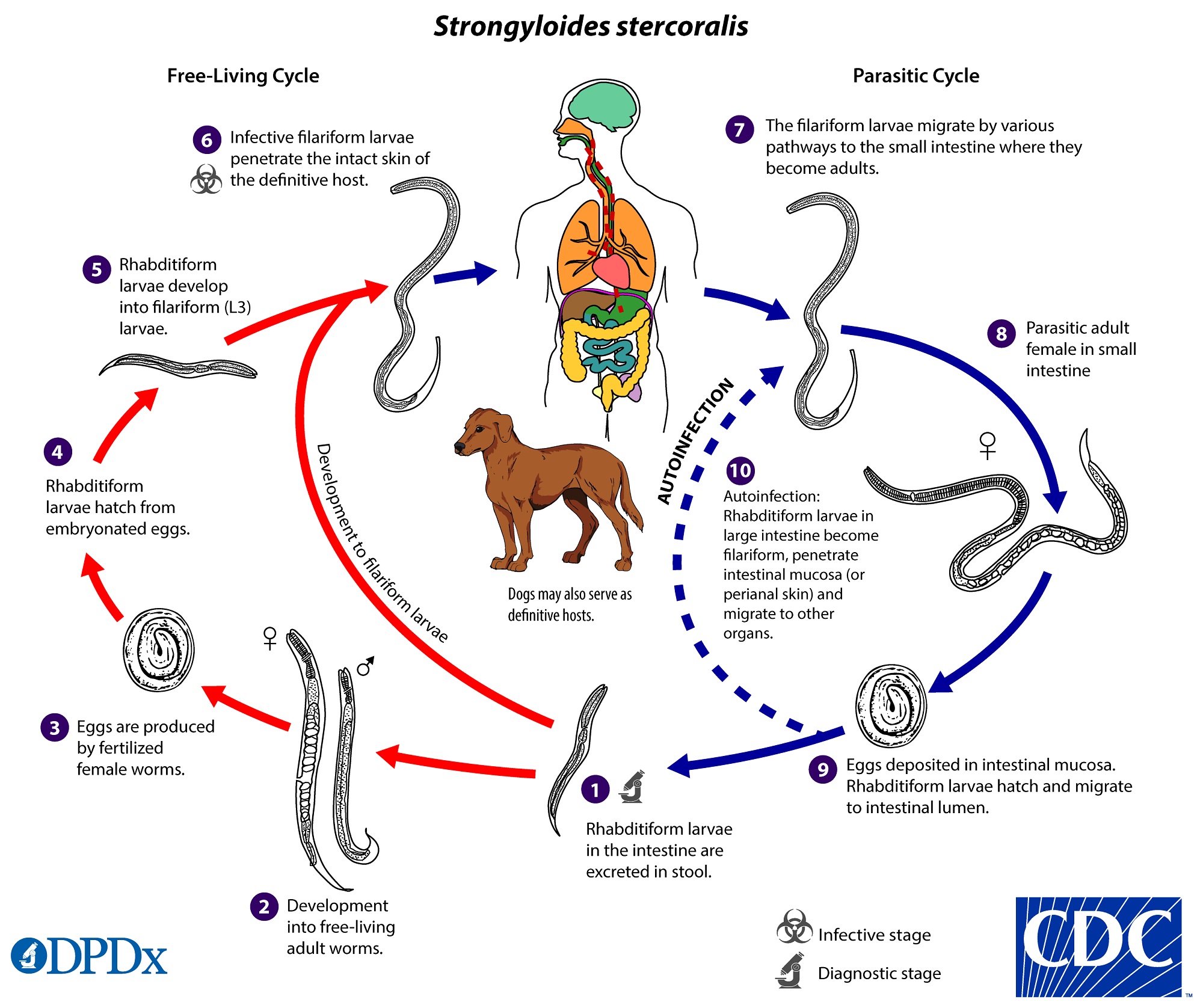
Life Cycle
Typical Symptoms
How It Spreads
Infected soil, water, vegetables
Testing Methods
- Stool microscopy (O&P)
Potential Treatments Used
- Albendazole
- Mebendazole
Albendazole and Mebendazole are recommended for allopathic treatment. Freedom, Cleanse, Restore protocol is recommended for herbal treatment
Prevention
Follow proper hygienic measures. Wash and peel all raw vegetables and fruits before eating. When traveling in countries where the water supply may be unsafe, avoid uncooked foods washed with unboiled tap water. Avoid walking barefoot in potentially contaminated soil
Interesting Facts
- When in the larval stage, species identification is not possible as the larvae have not developed reproductive organs that are important for species recognition. With a larval nematode infection of an unknown species, there is no way of knowing how long it takes to become an adult worm. The only way to find that out is to know what species it is because each nematode species has its own incubation period and some will never reach adulthood when infecting in a human host and may stay in that larval stage as a dead end infection. Larval forms in such infections often, but not always belong in the genus Ascaris or Strongyloides.