
Parasite Profile
Dipylidium caninum
Cestode (tapeworm)Small intestineWorldwide
Quick Facts
Scientific Name
Dipylidium caninum
Common Name
Dog tapeworm, Cucumber tapeworm, Double-pore tapeworm
Parasite Type
Cestode (tapeworm)
Where It Lives
Small intestine
How It Spreads
Flea ingestion
Prevalence
Worldwide
Gold Standard
Stool microscopy (O&P)
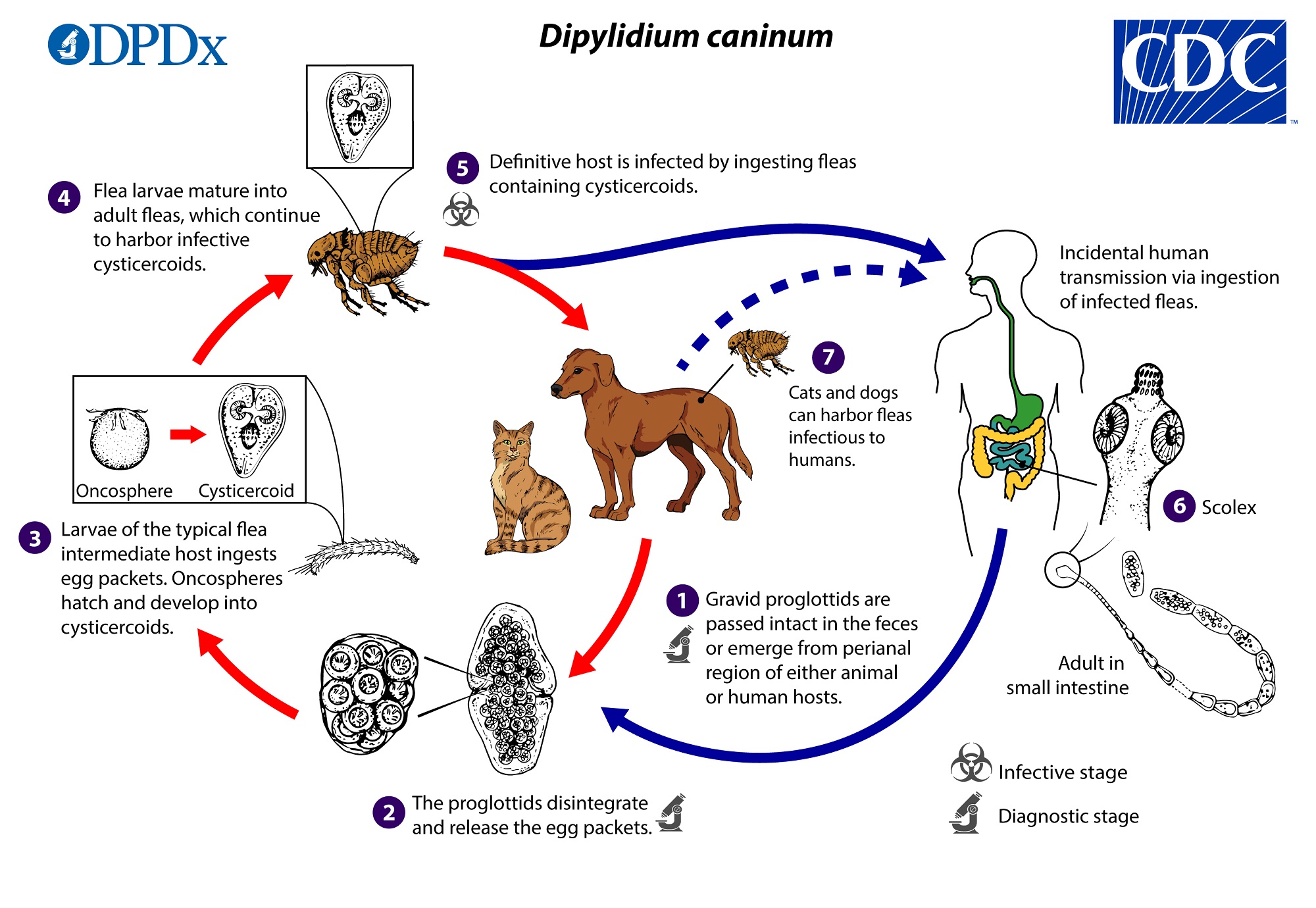
Life Cycle
Typical Symptoms
How It Spreads
By swallowing a flea infected with a tapeworm larvae while self-grooming. Eggs are passed in the host's feces and ingested by fleas, which are in turn ingested by another mammal after the tapeworm larvae partially develop. Examples of fleas that can spread D. caninum include Ctenocephalides canis (the dog flea) and Ctenocephalides felis (the cat flea). Humans, especially children, become infected by accidently ingesting infected fleas
Testing Methods
- Stool microscopy (O&P)
Potential Treatments Used
- Niclosamide
- Praziquantel
Praziquantel or Niclosamide are recommended for allopathic treatment. Freedom, Cleanse, Restore protocol is recommended for herbal treatment
Prevention
Control fleas on pets in their indoor and outdoor environments. Treat your dogs and cats promptly if they have tapeworms. Clean up after your pet. Do not allow children to play in areas that are soiled with pet or other animal feces. Have your children wash their hands after playing with dogs and cats, and after playing outdoors. The best way to prevent human infection is to treat infected animals and to kill fleas. Avoid intimate contact with pets.
Interesting Facts
- infects animals afflicted with fleas, including canids, felids, and pet-owners