
Parasite Profile
Dientamoeba fragilis
FlagellateLarge intestine (cecum)Rural / poor sanitation, Worldwide
Quick Facts
Scientific Name
Dientamoeba fragilis
Common Name
Fragile intestinal flagellate
Parasite Type
Flagellate
Where It Lives
Large intestine (cecum)
How It Spreads
Fecal-oral
Prevalence
Rural / poor sanitation, Worldwide
Gold Standard
Stool microscopy (O&P)
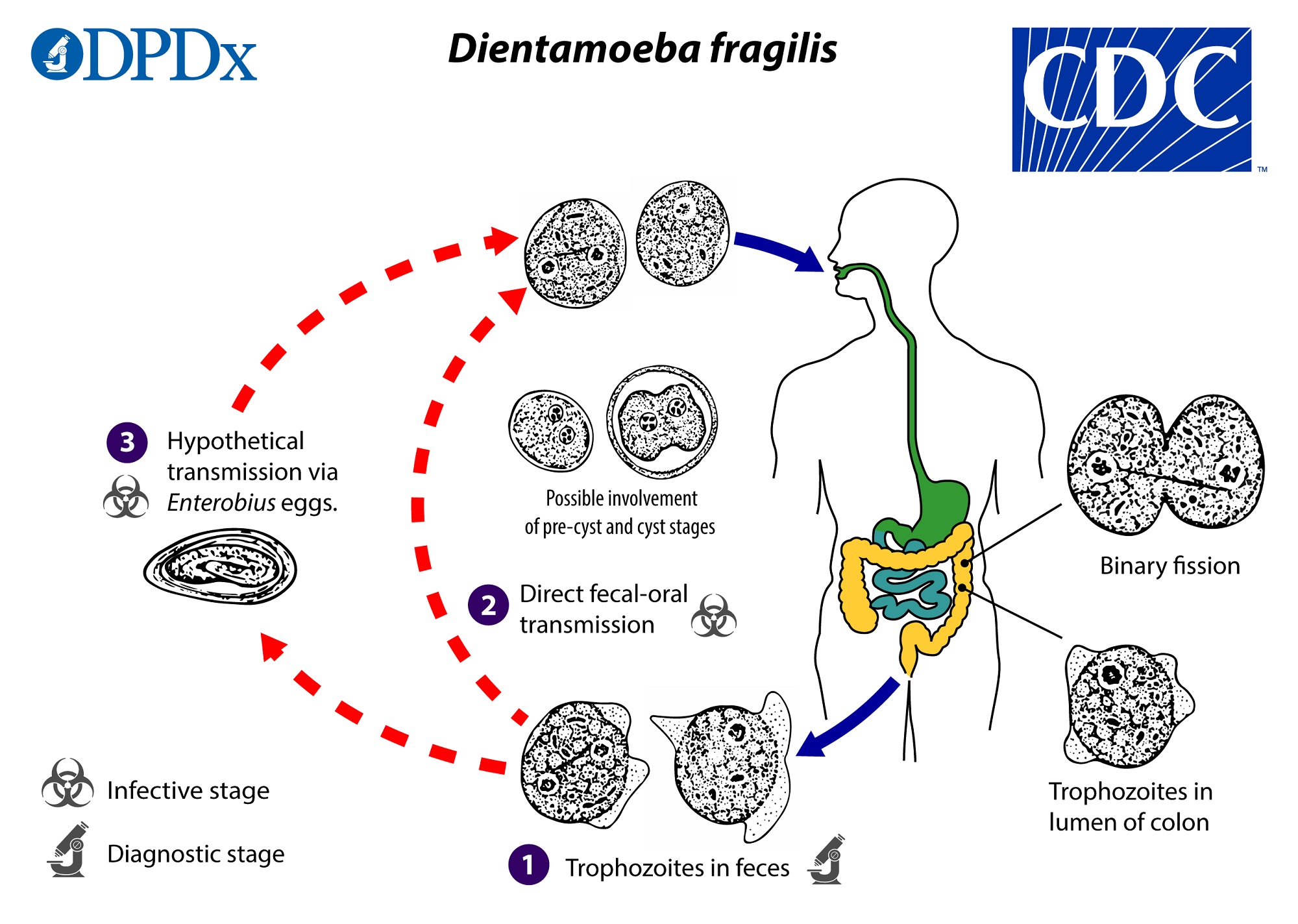
Life Cycle
Typical Symptoms
How It Spreads
D. fragilis is transmitted by fecal-oral route and is usually found in children with diarrhea, gas, bloating and abdominal pain.The infection does not spread from the intestines.
Testing Methods
- PCR
- Stool microscopy (O&P)
PCR
Potential Treatments Used
- Nitazoxanide
- Tinidazole
Nitazoxinide or Tinidazole is recommended for allopathic treatment. Freedom, Cleanse, Restore protocol is recommended for herbal treatment
Prevention
Follow proper hygienic and sanitation measures. Wash and peel all raw vegetables and fruits before eating. Avoid drinking unboiled or unpurified tap water and avoid uncooked foods washed with unboiled or unpurified tap water. Avoid oral-anal sexual contact
Interesting Facts
- identified in some other mammals (e.g., non-human primates, swine), but the epidemiologic significance of these hosts is unknown