
Parasite Profile
Ancylostoma/Necator
Nematode (roundworm)Heart, Lungs, Small intestine, Subcutaneous tissueAfrica, Americas, Australia / Oceania, Europe, Middle East, North Africa, Southern Europe
Quick Facts
Scientific Name
Ancylostoma/Necator
Common Name
hookworms
Parasite Type
Nematode (roundworm)
Where It Lives
Heart, Lungs, Small intestine, Subcutaneous tissue
How It Spreads
Contaminated food, Soil contact / skin penetration
Prevalence
Africa, Americas, Australia / Oceania, Europe, Middle East, North Africa, Southern Europe
Gold Standard
Stool microscopy (O&P)
Life Cycle
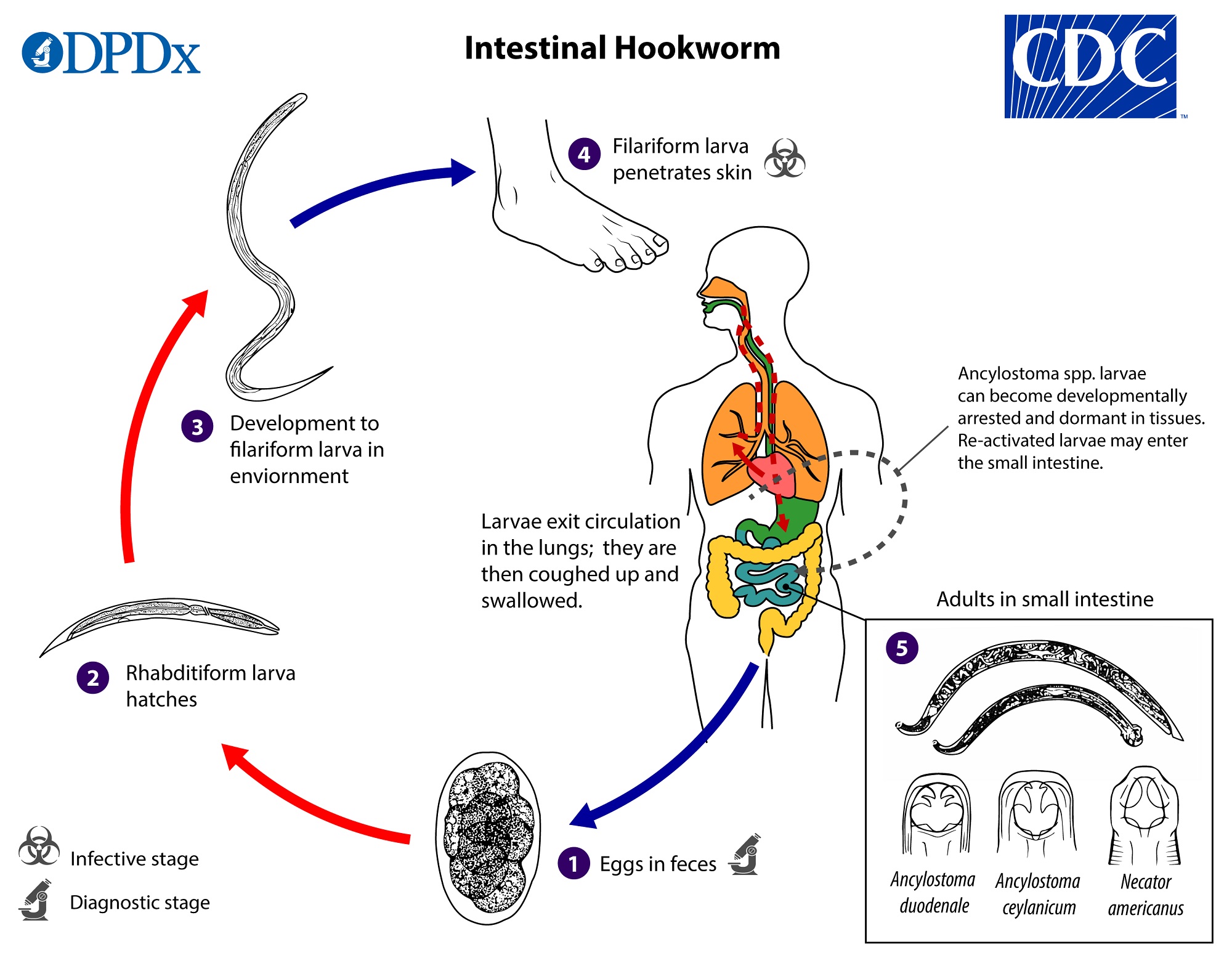
Typical Symptoms
How It Spreads
Humans may become infected when filariform larvae penetrate the skin upon contact. They travel through the blood vessels to the heart and then lungs. They penetrate into the pulmonary alveoli, ascend to the pharynx, and are swallowed. The larvae reach the small intestine then mature into adults. Adult worms attach to the intestinal wall with much blood loss by the host. Longevity is 1 to several years. The larvae cannot mature further in the human host, and migrate aimlessly within the epidermis, sometimes as much as several centimeters a day. Some larvae may persist in deeper tissue after finishing their skin migration.
Testing Methods
- Stool microscopy (O&P)
Potential Treatments Used
- Albendazole
- Ivermectin
- Mebendazole
- Pyrantel pamoate
In countries where hookworm is common and reinfection is likely, light infections are often not treated. In the United States, hookworm infections are generally treated allopathically with Albendazole, Mebendazole or Pyrantelpamoate can also be used. Cutaneous larva migrans is a self-limiting infection but can be treated with Albendazole or Ivermectin. Freedom, Cleanse, Restore protocol is recommended for herbal treatment.
Prevention
Do not walk barefoot on soiled grounds. Practice good hygiene
Interesting Facts
- Many types of hookworms for many mammasl